Airway and Breathing in Orthodontics – Part 1 of 3
Most parents do not come to an orthodontic appointment thinking about breathing. They come because the teeth look crowded, the bite seems uneven, or adult teeth are not coming through as expected.
Then, during the conversation, they mention that their child sleeps with their mouth open, snores, wakes with a dry mouth, or seems tired after what should have been a full night of sleep.
Those details matter. They do not automatically mean a child has obstructive sleep apnoea, and an orthodontist cannot diagnose a sleep disorder from the face or bite. But when several clues appear together, they can be a good reason to look more closely and arrange the right medical referral.
At Adelaide Orthodontics, we take an airway-aware approach: notice the pattern, ask targeted questions, and refer when the signs point in the same direction.
What Is Sleep-Disordered Breathing?
Sleep-disordered breathing is an umbrella term. It includes habitual snoring, increased resistance to airflow during sleep, and obstructive sleep apnoea, where breathing is repeatedly reduced or interrupted.
Paediatric obstructive sleep apnoea is estimated to affect about 1-5% of children. Not every child who snores has sleep apnoea, but regular loud snoring in a child is not something to simply ignore.
Key point: One sign rarely tells the whole story. A pattern of night-time symptoms, daytime effects and clinical findings is far more useful.
Why Might a Dental or Orthodontic Team Notice First?
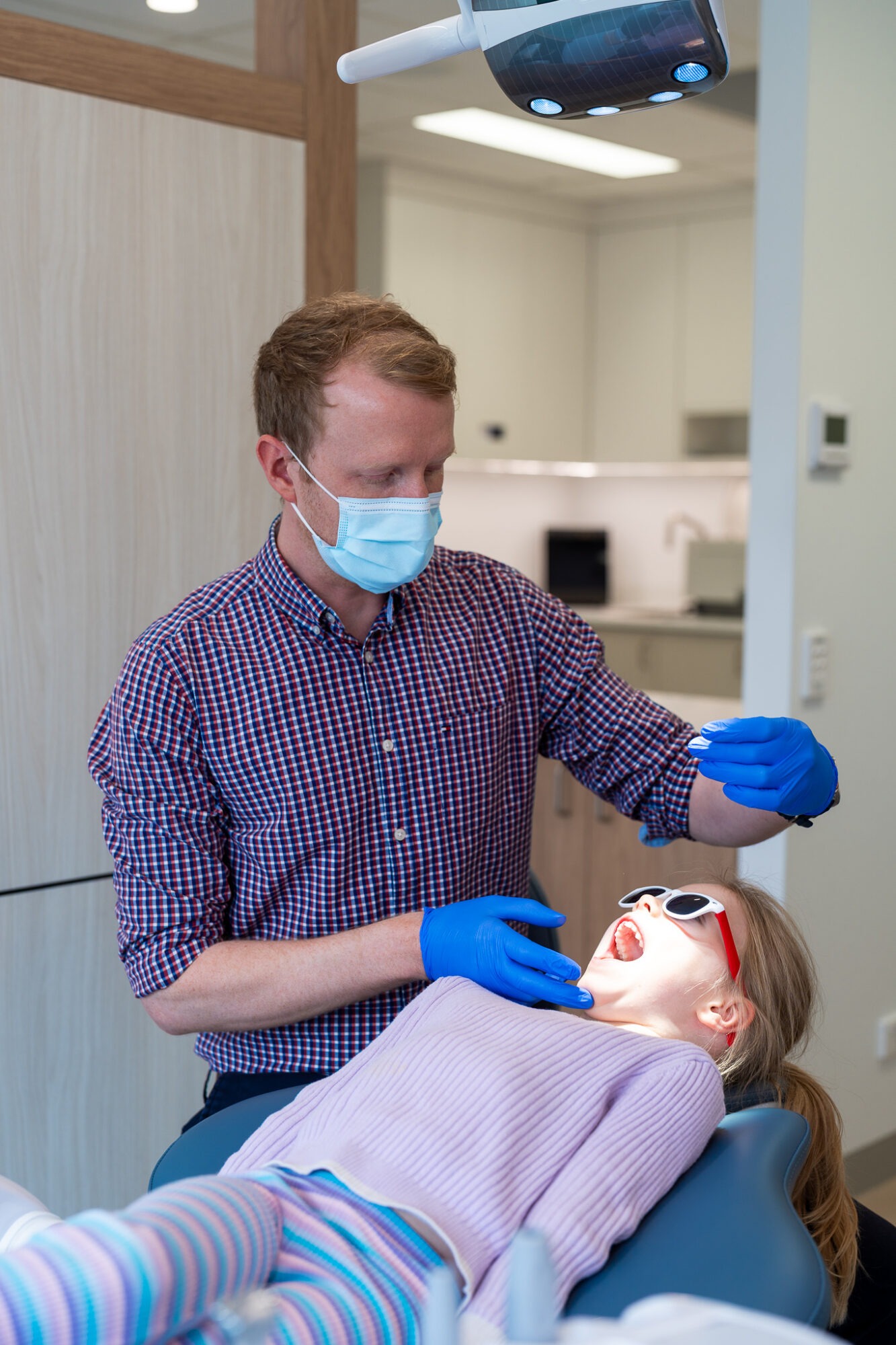
Children see dentists, oral health therapists, hygienists and orthodontists regularly while the teeth, jaws and face are still developing. That gives the dental team a chance to notice changes that a family may not have joined together yet.
During a routine assessment, we can see the width of the upper jaw, the shape of the palate, how the teeth are erupting, how the lips rest, and whether the child tends to breathe through the mouth while sitting quietly.
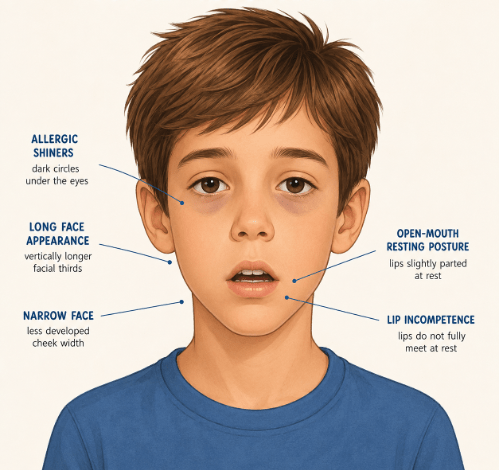
Common clues can include:
- Lips apart or an open-mouth posture at rest
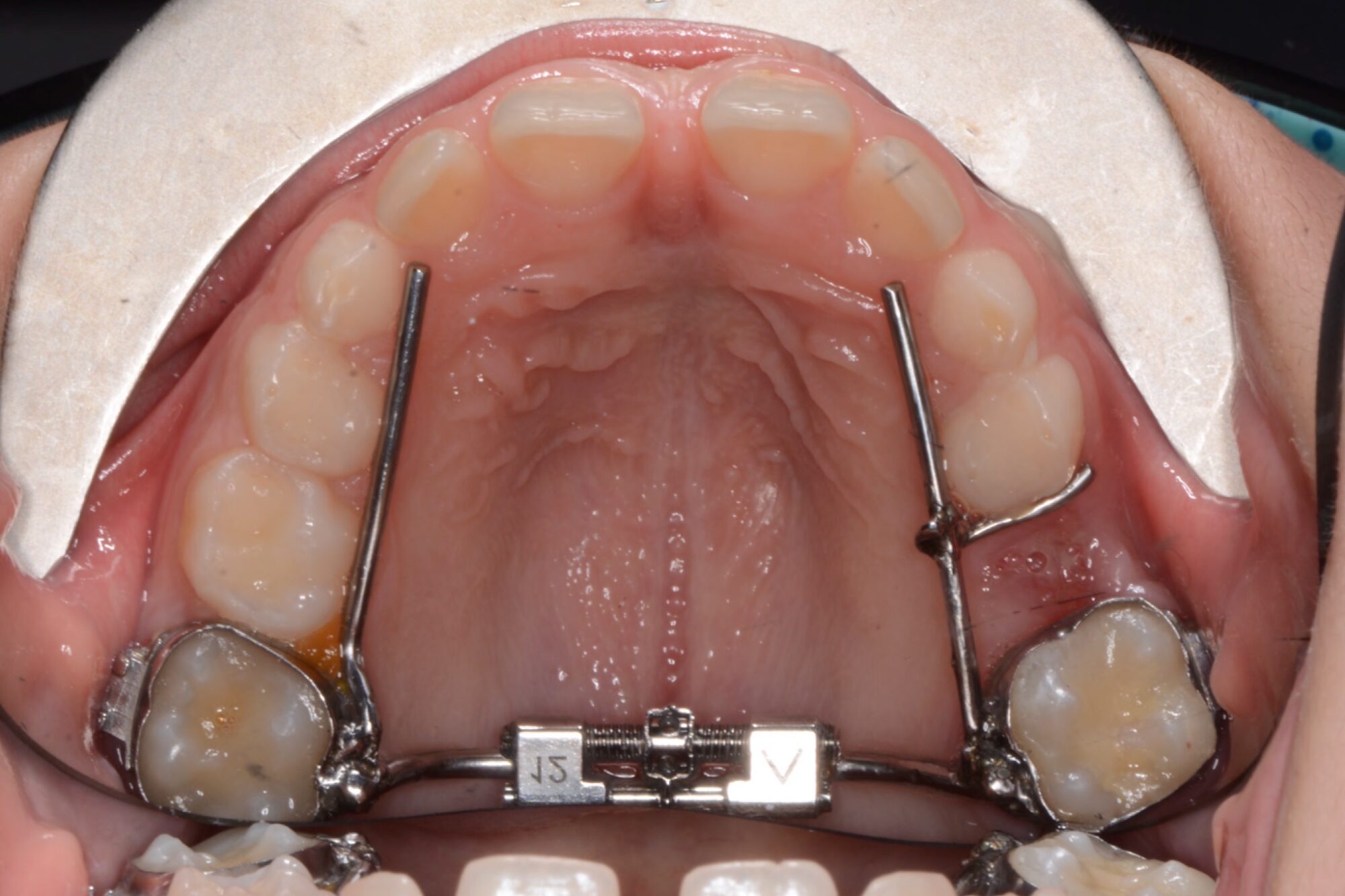
- A high or narrow palate
- A posterior crossbite or narrow upper dental arch
- Crowding or reduced space for adult teeth to erupt
- Dry lips, dry mouth or irritated gums
- Large tonsils that are visible during the oral examination
- Dark circles associated with allergies, frequent congestion or a history of nasal obstruction
These findings can have many causes. A narrow palate does not prove that a child has a breathing problem, and mouth breathing does not prove that orthodontic treatment is needed. The value is in recognising the overall pattern.
Signs Parents Can Watch For
At Night
- Snoring more than occasionally, especially if it is loud enough to hear from another room
- Pauses in breathing, gasping, choking or obvious effort to breathe
- Restless sleep, frequent waking, sweating or unusual sleeping positions
- Sleeping with the mouth open, drooling or waking with a dry mouth
- Morning headaches or ongoing bed-wetting beyond the expected age
During the Day
- Mouth breathing while reading, watching television, concentrating or playing sport
- Difficulty keeping the lips comfortably together at rest
- Persistent nasal congestion, allergies or recurrent blocked-nose symptoms
- Tiredness, irritability, attention or behaviour concerns
- Poor energy even when the child appears to spend enough time in bed
Many of these symptoms are non-specific. Tiredness and irritability can have plenty of explanations. However, several signs occurring together are worth discussing with a health professional.
When Should You Seek Help?
Arrange a medical review if your child snores regularly, appears to struggle for breath during sleep, has witnessed pauses, or has daytime symptoms that may be linked to poor-quality sleep. You can raise the concern with your GP, paediatrician, dentist or orthodontist.
What Can an Orthodontist Do?
Our role is to screen, suspect, refer and support – not to diagnose sleep apnoea.
An orthodontist can ask a small number of useful questions, examine the face, palate, bite and visible tonsils, review existing orthodontic records, and recommend an ENT or sleep assessment when the history and clinical signs line up.
Sometimes the main issue is enlarged tonsils or adenoids. Sometimes allergies or persistent nasal obstruction are involved. Sometimes a genuinely narrow upper jaw is part of the picture. Often, there is more than one contributor, which is why co-ordinated care matters.
You can read more about the broader signs that may justify an orthodontic visit in our article, 7 Signs It Is Time to Visit an Orthodontist.
The Bottom Line
Mouth breathing and snoring should not be used to sell orthodontic treatment. They should prompt careful listening, pattern recognition and, when appropriate, referral.
Early recognition may lead to an earlier ENT or sleep assessment. If a genuine orthodontic problem is also present, it can help us choose the most appropriate timing and treatment pathway.
If you have noticed a pattern in your child, you can book an assessment with Dr Sven or Dr Mimi at Adelaide Orthodontics in Unley or Hahndorf.
Next in the series: What Happens During an Airway-Aware Orthodontic Assessment?
Dr Sven
Sources and Further Reading
- American Academy of Pediatrics: Diagnosis and Management of Childhood Obstructive Sleep Apnea Syndrome
- Liu et al. Dental and craniofacial characteristics among children with obstructive sleep apnoea: a systematic review and meta-analysis
- Chervin et al. Pediatric Sleep Questionnaire: validity and reliability
This article provides general information only and does not diagnose or replace medical assessment for a sleep or breathing disorder.