Airway and Breathing in Orthodontics – Part 3 of 3
Parents often ask a very reasonable question: If my child’s upper jaw is narrow, will an expander help them breathe?
The honest answer is that expansion may improve some airway measurements and breathing outcomes in selected patients, but it is not the only reason to use an expander and it is not a stand-alone cure for obstructive sleep apnoea.
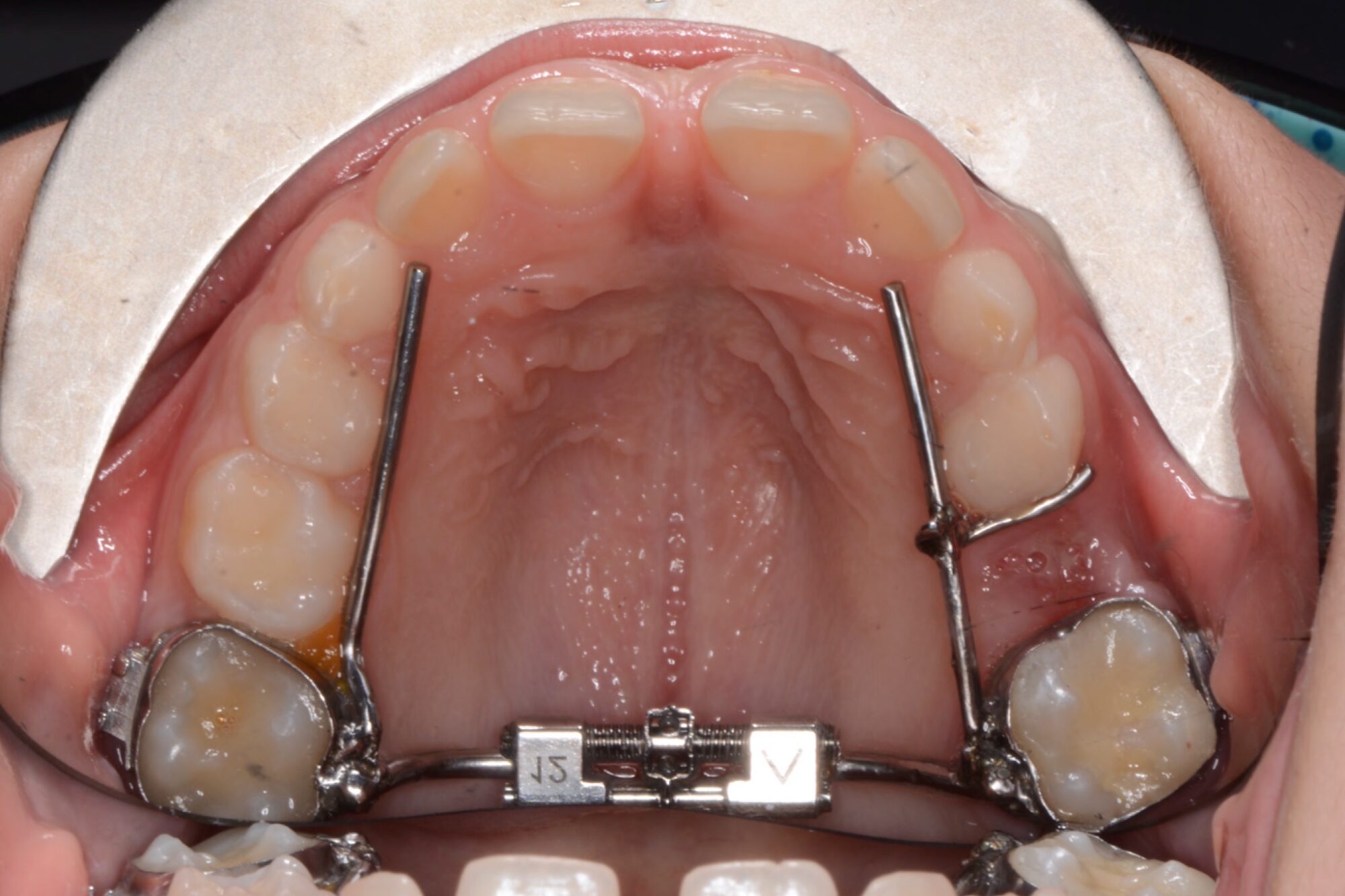
Maxillary expansion is first an orthodontic treatment for a genuine transverse problem – such as a narrow upper jaw, posterior crossbite, crowding or reduced space for adult teeth to erupt.
Because the floor of the nose sits directly above the palate, widening the maxilla can also change the nasal cavity. The important question is whether that anatomical change leads to a meaningful improvement in function.
What Is Maxillary Expansion?
A maxillary expander applies controlled forces to widen the upper dental arch and, in growing patients, the underlying maxilla. The appliance design and activation schedule depend on the child’s age, skeletal maturity and orthodontic needs.
The main orthodontic goals are to:
- Correct a posterior crossbite or functional shift
- Treat a true transverse deficiency of the upper jaw
- Create space for crowded or blocked-out teeth
- Reduce the risk of eruption problems in selected cases
- Co-ordinate the upper and lower dental arches
A possible improvement in nasal airflow can be an additional benefit in the right patient. It should not be promised as the sole purpose of treatment.
What Does the Evidence Support?
1. Expansion Can Change Nasal Anatomy
A 2022 systematic review and meta-analysis included 12 studies of children aged 8-15 who had rapid maxillary expansion and three-dimensional airway imaging.
The most consistent finding was an increase in nasal cavity volume. Changes farther back in the nasopharynx and oropharynx were smaller or less consistent.
This is an important distinction: a larger space on a scan does not automatically mean a child breathes better, sleeps better or no longer has sleep apnoea.
2. Some Selected Patients Show Better Breathing Measures
A 2026 prospective randomised controlled trial studied post-pubertal adolescents aged 14-17 with maxillary constriction. It compared three expansion appliance designs and included an age-matched control group.
After three months, the expansion groups showed reductions in total nasal resistance and the apnoea-hypopnoea index. The miniscrew-assisted group, known as MARPE, had a greater reduction in the apnoea-hypopnoea index than one of the tooth-borne appliance groups.
The study is encouraging because it used objective breathing measures and a control group. It was still a modest sample with short follow-up, and it used respiratory polygraphy rather than full polysomnography. Longer-term research is needed.
3. Children May Need Both ENT and Orthodontic Care
A 2026 retrospective cohort looked at 80 children aged 7-9 who had sleep-study-confirmed obstructive sleep apnoea, a narrow maxilla, and enlarged tonsils and adenoids.
The children received both adenotonsillectomy and semi-rapid maxillary expansion, in different sequences. Breathing disturbance improved after each treatment and improved further after both had been completed.
That does not mean every child needs surgery and expansion. It supports a more practical message: when both soft-tissue obstruction and skeletal narrowing are present, treating only one part of the problem may leave another contributor behind.
4. The Overall Evidence Still Has Limits
Across the broader research, studies differ in patient selection, appliance type, sleep testing, follow-up and the presence of tonsil, adenoid, allergy or weight-related factors.
Recent reviews therefore recommend caution. Orthodontic treatment may be useful as an adjunct for selected children with a real craniofacial or orthodontic indication, but diagnosis and medical management remain multidisciplinary.
The practical takeaway: Expansion can be relevant to airway care, but patient selection matters and orthodontics should not replace ENT or sleep medicine.
Why Does Timing Matter?
When expansion is genuinely needed, timing changes the biology of the response.
A long-term study by Baccetti and colleagues compared rapid maxillary expansion before the pubertal growth peak with treatment during or after that peak. Both groups achieved useful dental expansion, but the earlier group had more pronounced and lasting skeletal widening, including greater change in the nasal cavity.
This does not mean every child should have an expander early. It means that when a true transverse deficiency is present, assessment before or around the growth spurt may provide more treatment options.
We have explained the timing research in more detail in Age Matters: The Science Behind Successful Jaw Expansion Treatment.
What About Older Teenagers and Adults?
As the facial skeleton matures, conventional tooth-borne expansion tends to create more dental tipping and less skeletal widening.
In selected older teenagers and adults, miniscrew-assisted rapid palatal expansion, or MARPE, may be considered when skeletal expansion is the goal. Case selection is important and may include a review of periodontal support, sutural maturity, medical history, expectations and three-dimensional imaging when clinically justified.
Some adults are better suited to surgically assisted expansion. There is no one appliance or age cut-off that works for everyone.
How Do ENT and Orthodontics Fit Together?
The sequence should be individualised.
- Severe symptoms or obvious obstruction: prioritise medical, paediatric or ENT assessment.
- A strong orthodontic indication with mild or moderate concern: expansion may sometimes proceed alongside referral or monitoring.
- Known sleep apnoea: keep medical follow-up in place and review symptoms objectively rather than assuming the bite correction has treated the sleep disorder.
Some children need ENT management first. Some are treated in parallel. Some simply need monitoring. The aim is to treat the child, not just an airway image or a set of dental measurements.
What Does This Mean for Parents?
- Do not seek an expander solely because a child snores, without a proper orthodontic and medical assessment.
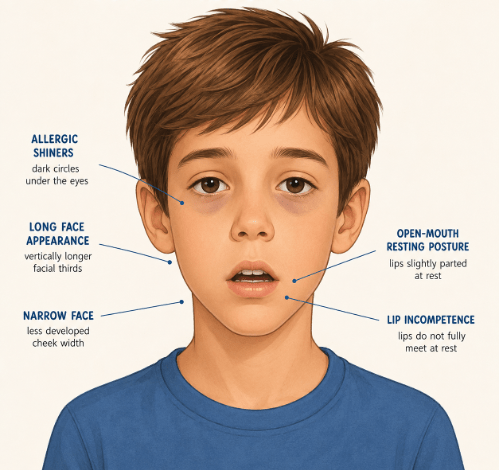
- Do not ignore a narrow palate or crossbite when it occurs alongside regular mouth breathing, snoring or poor-quality sleep.
- Ask what the orthodontic diagnosis is, what the appliance is intended to correct, and how success will be measured.
- Expect clear discussion of possible benefits, limitations and the role of ENT or sleep specialists.
The Bottom Line
Maxillary expansion is a valuable orthodontic tool when the upper jaw is genuinely narrow. It can widen the nasal floor and may improve nasal resistance or sleep-related breathing measures in selected patients.
The potential airway benefit is welcome, but it is not guaranteed. Expansion should be recommended for sound orthodontic reasons and co-ordinated with medical care whenever sleep-disordered breathing is suspected or diagnosed.
If you are concerned about your child’s bite, palate or jaw development, you can book a consultation with Dr Sven or Dr Mimi at Adelaide Orthodontics in Unley or Hahndorf.
Read the full series:
Part 1: Mouth Breathing, Snoring and Orthodontics
Part 2: What Happens During an Airway-Aware Orthodontic Assessment?
Dr Sven
Sources and Further Reading
- Balasubramanian et al. Rapid Maxillary Expansion and Upper Airway Volume: systematic review and meta-analysis
- Baccetti et al. Treatment Timing for Rapid Maxillary Expansion
- Soylu et al. The impact of different rapid palatal expansion appliances on sleep and nasal airway resistance
- Mahony et al. Maxillary Arch Expansion and Adenotonsillectomy in Prepubertal Children with Paediatric OSA
- Rinchuse et al. Avoid overstepping the bounds of evidence
This article provides general information only and does not diagnose or replace medical assessment for a sleep or breathing disorder.